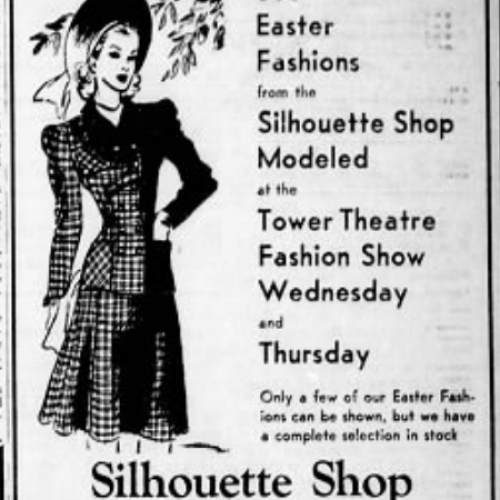
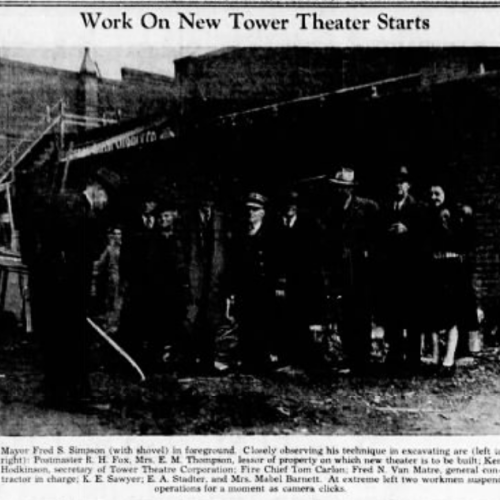
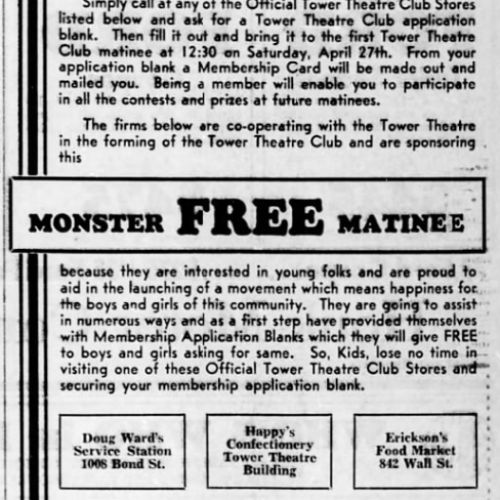
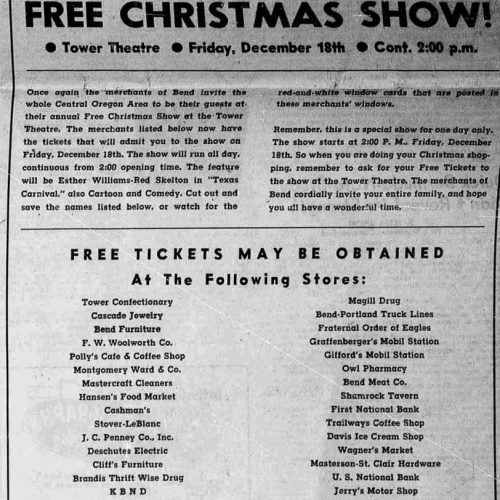
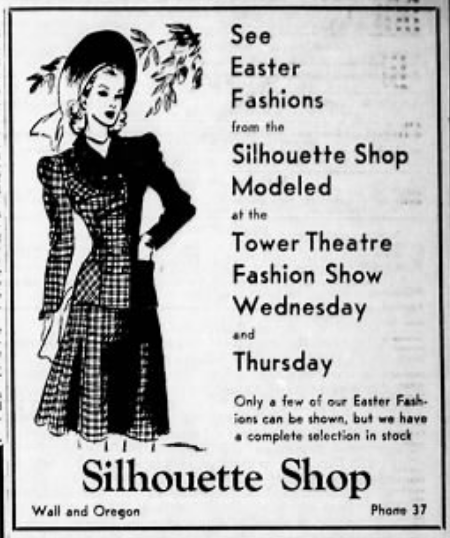
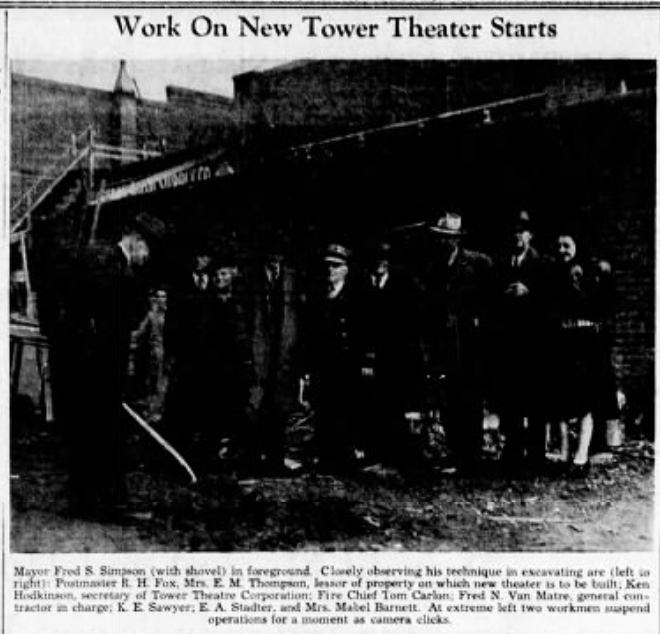
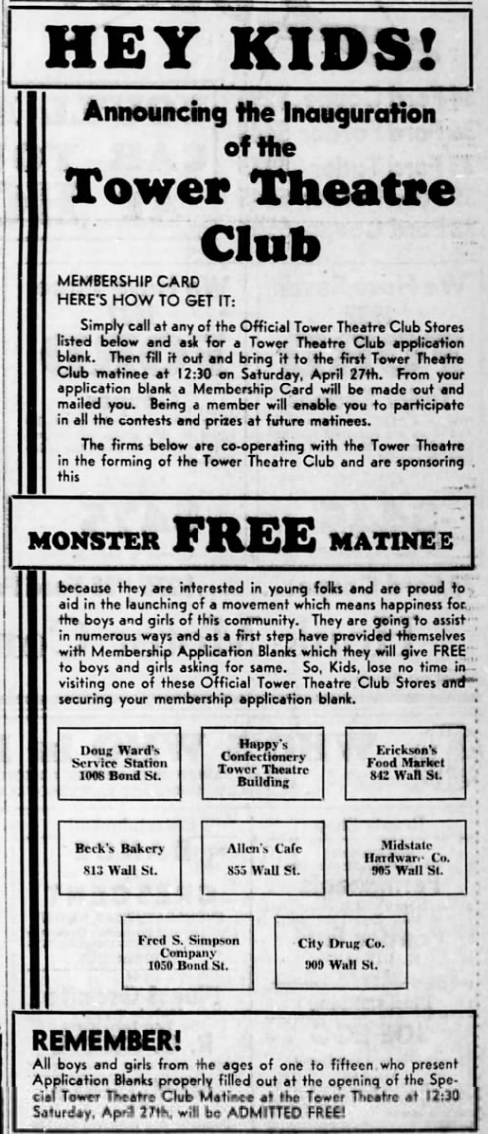
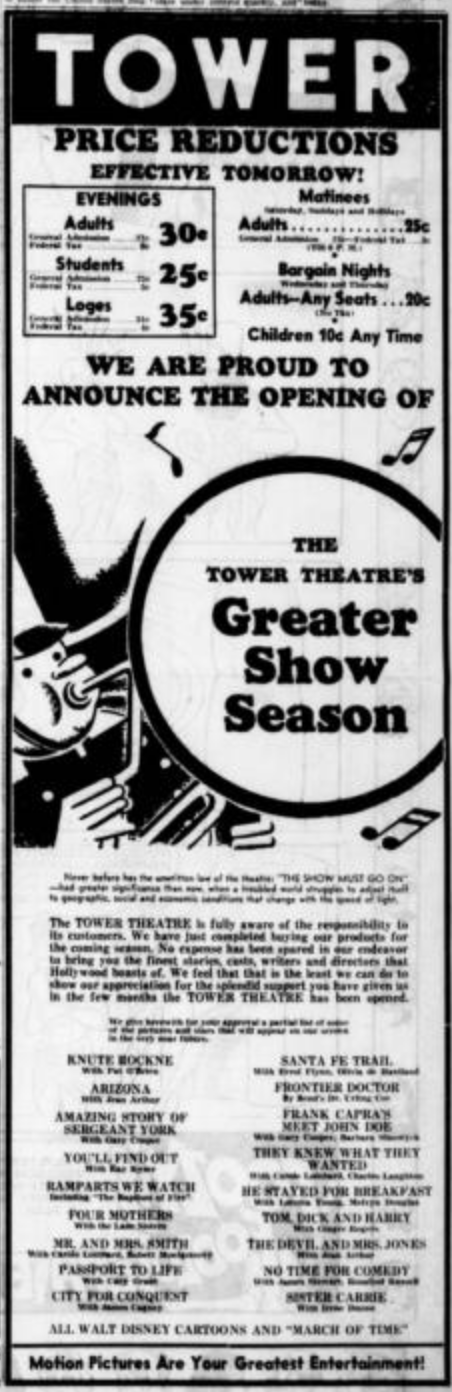
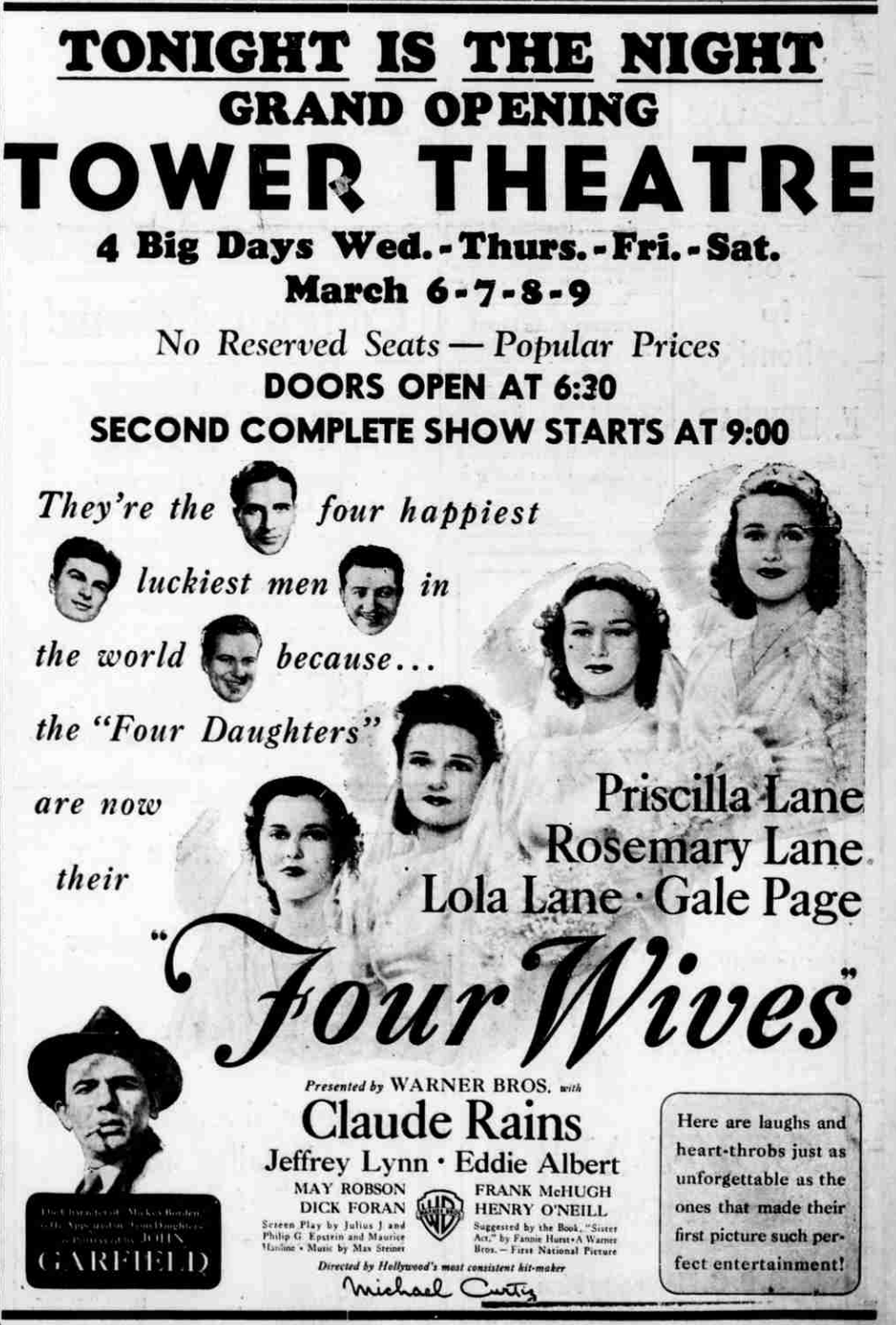
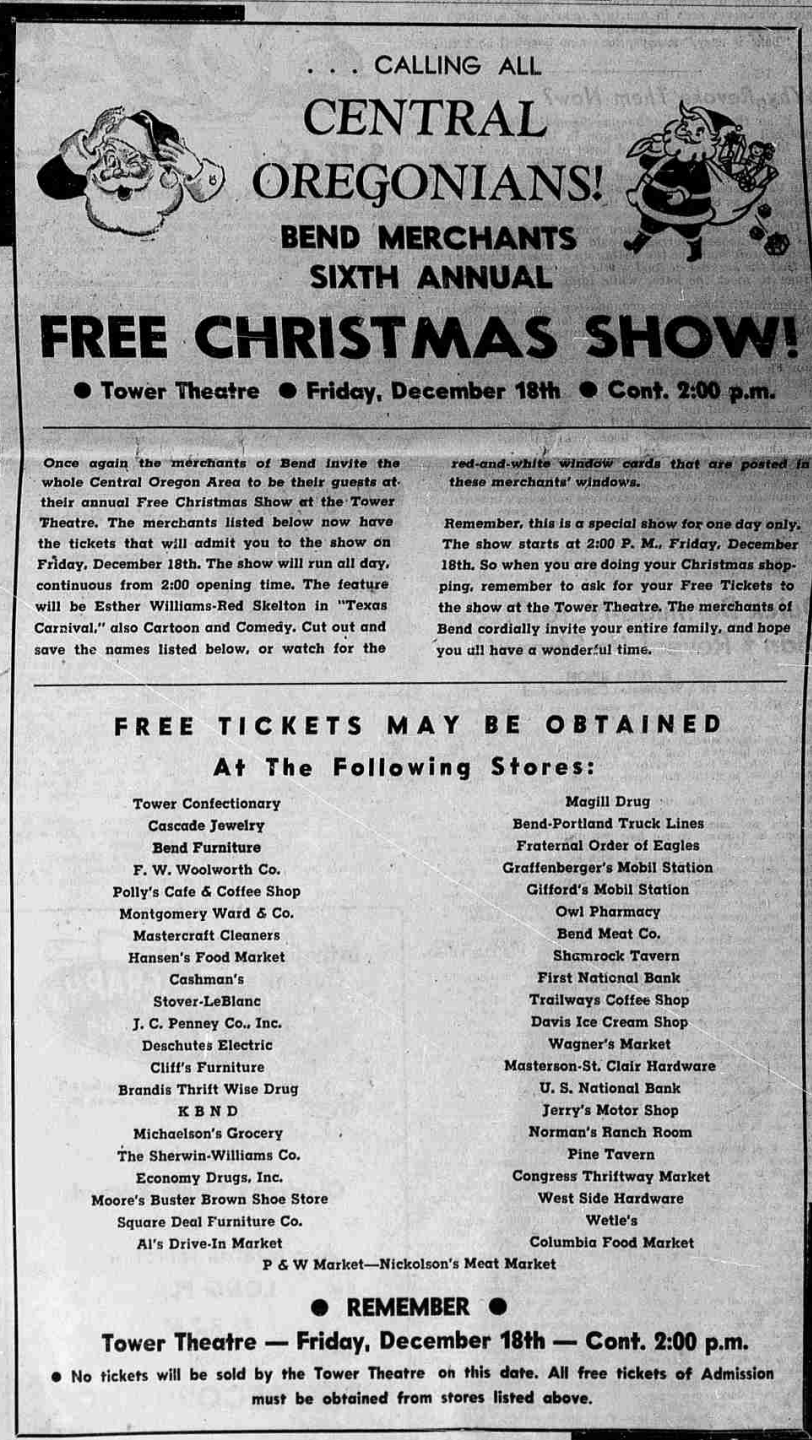
The Tower Theatre was completed on March 6, 1940, which took three short months of construction by general contractor Fred Van Matre. Being one of Bend’s iconic landmarks, the Tower Theatre still stands brightly with bright neon letters on the outside. After the great depression, many people around town saw the theatre as something that represents resilience and optimism as it stood tall even in the 40’s (Tower Theatre, 2019). The general construction of the building is modern yet was built to fit the general audiences of central Oregon, bringing many people in just from the large neon sign above the marquee. The building itself rises over 75 feet above the street, accentuated by more than 1,200 feet of neon tubing of green and gold that led many to the theater (Tower Theatre Historical Images, n.d.). There were originally 998 seats including the balcony and floor seats that allowed for masses of people to come and experience films on a big screen. There was even a women’s lounge on the mezzanine floor, becoming one of the show places in the theater that was lavishly decorated to appeal to women (Tower Theatre Historical Images, n.d.). The theater had the first dual projection system in the Northwest, which also brought in a lot of regional-wide attention that many were intrigued by (Tower Theatre, 2019). Although it started as a very small, single-screen theater, it became a space capable of hosting large community events like fashion shows, Christmas events, and kids’ shows. The theater takes pride in being accessible for all audiences across Oregon, including kids, adults, people who have seen films, and those who haven’t.
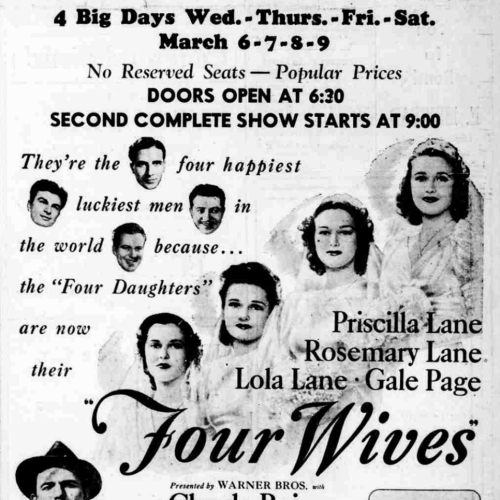
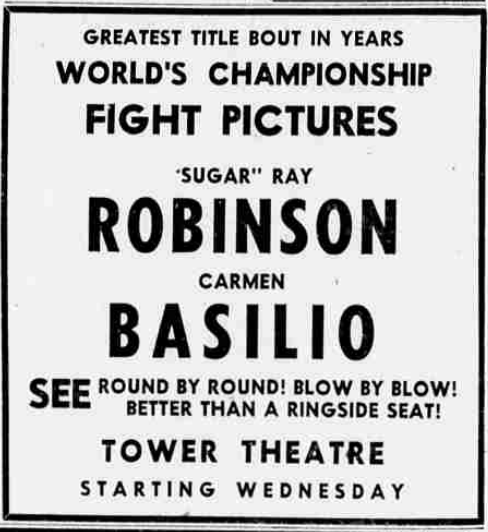
The first manager of the Tower Theatre, Ken Hodkinson, was the son of W.W. Hodkinson, also known as the founder of Paramount Pictures. With such ties to Paramount Pictures at the very beginning stages of the theater, many films were able to be shown from large companies rather than local films. Four different services from companies were provided, such as Columbia, RKO, Monogram, and Warner Bros (Tower Theatre Historical Images, n.d.). Many films were supplemented by short programs after a big showing of first run shows, such as short Disney cartoons. Managers at Tower were very adamant about showing films on a well-run schedule, which eventually turned into showing films on the Sunday-Monday-Tuesday program. The first film to be shown on the big screen at Tower was “Four Wives”, of which starred Priscilla Lane, Claude Rains, and Eddie Albert, who were big movie stars at the time. Opening night was celebrated for days after as it was extremely successful after its first showing. Following shortly after, the theater hosted not only films, but performances and community events that kept people coming in time and time again. With the occurrence of drive-ins and the home television, attendance suddenly dropped at the theater, and with many changes to the management, eventually the theater fell into despair by the 80’s.
The building eventually closed in 1993, not knowing at the time that it would eventually be reopened years later. With the rise of multi-screen theaters, Tower struggled. The owners at the time, a large theatre chain, chose not to renovate and in 1994 sold the Theatre to a partnership who was interested in developing the theater into retail and office spaces (Tower Theatre Historical Images, n.d.). In 1996, on behalf of the Regional Arts Council of Central Oregon (RACOCO) the Tower Theatre Foundation started to raise money and tried to secure funding to save the theater. The theatre agreed to hold the building until the appropriate funds could be used to buy, restore, and operate the theater (Tower Theatre Historical Images, n.d.). This attempt led masses to attempt to revive the theater, securing funding from the government, Central Oregon Community College, and surrounding businesses. These people were not ready to give up just yet, and eventually the city bought the theater for 445,000 dollars (Visit Central Oregon, 2026). In the fall of 1996, the Executive Director of Bend’s Chamber of Commerce made one final attempt to save the theater, planning to renovate it (Tower Theatre Historical Images, n.d.). Eventually, a group of 30 residents came together to create a board solely dedicated to renovating the theater. In 1997, this board was challenged to raise 300,000 dollars to support the renovation, and in July, the board worked with The Tower Theatre Foundation to become a non-profit organization. A month later, the foundation raised over 350,000 dollars, eventually being able to buy the Tower from the city of Bend in 2001. Over time, the community wanted a flexible performance space rather than just a movie theater, making the campaign goal rise to over 4 million dollars. The renovation project starts in 2002, including the expansion of the interior from 10,000 square feet to over 13,000 (Tower Theatre Historical Images, n.d.). This also included things like new box seats, a bigger lobby, orchestra seating, and a larger stage. There was also a new video projection system that was added, as well as a 35 mm film projection system (Tower Theatre Historical Images, n.d.). The grand re-opening happened on January 30, 2004, and is now managed by Executive Director Ray Solley.
Now, the Tower Theatre still stands as an iconic landmark of Bend, Oregon. The theater relies on donor support to stay open and continues to be a non-profit organization that focuses on bringing entertainment across central Oregon. With the re-opening of the theater, crowds continue to gather to admire the mixed Art Deco interior with greatly updated amenities. The theater is now used mainly for performances such as indoor music festivals, film festivals, and educational programs.