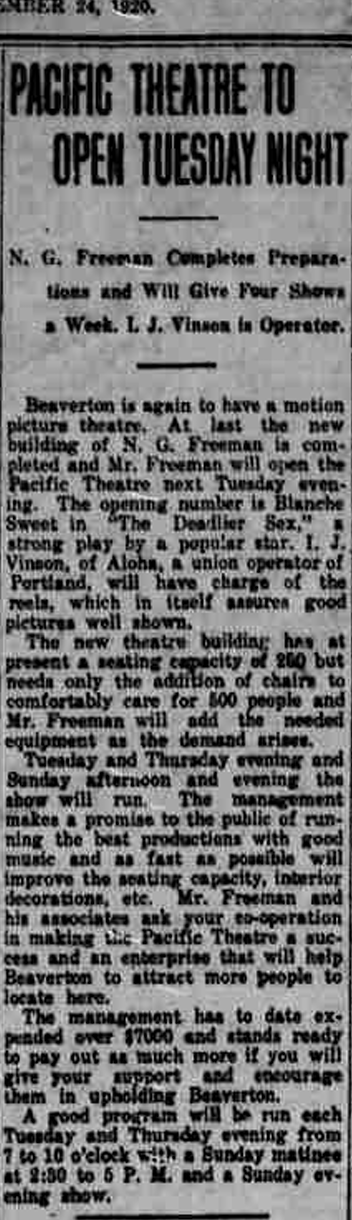
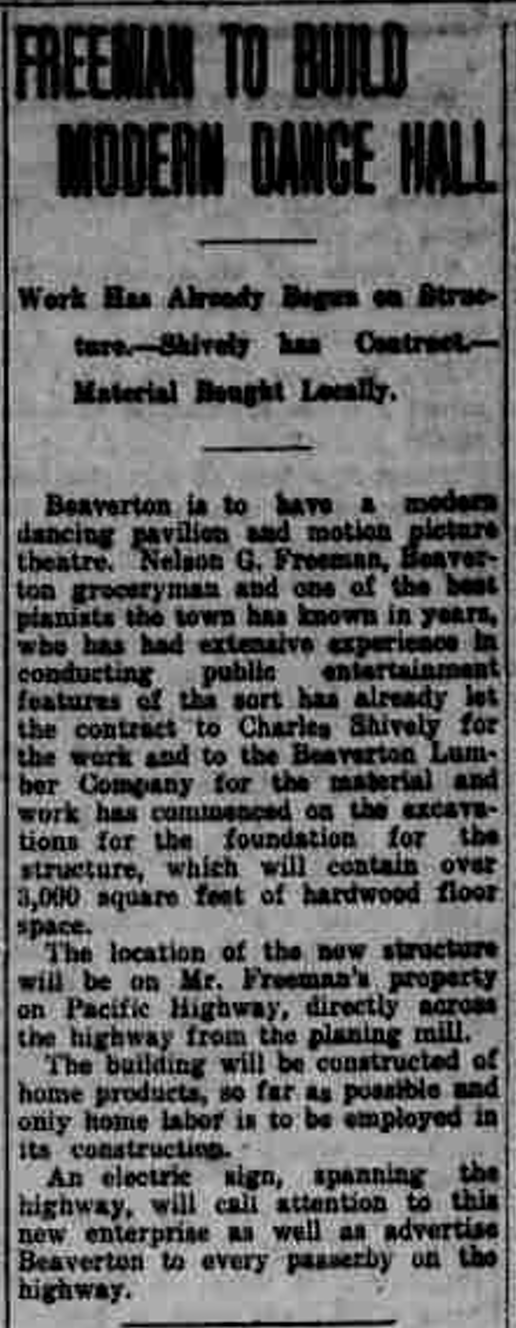
In 1920, the theater later known as the Beaver Theatre briefly operated under the name Pacific Theatre during a period of expansion and renovation. Two newspaper articles from September and December 1920 show how the theater's owner, N. G. Freeman, presented the theater not only as a place for entertainment but also as a symbol of Beaverton’s growth and modernization.
A September 3, 1920, article announced Freeman’s plans to build a “modern dance hall and motion picture theatre” along Pacific Highway. The article emphasized that the structure would contain more than 3,000 square feet of hardwood flooring and would use local labor and materials whenever possible. Freeman also chose a highly visible location near the highway so the building would attract attention and advertise Beaverton to travelers passing through town. The theater was designed as both an entertainment venue and a public statement about the town’s future development.
Reopening the Pacific Theatre, December 1920
Display Name
ahockley
May 18, 2026
Categories
 Pacific Theatre to Open Tuesday Night
 Freeman to Build Modern Dance Hall