The sport of boxing became legal in most states in the 1920s and became particularly popular in the United States in the 1950s. Its rise in popularity led to increases in boxing match screenings in movie theatres. However, the fight to allow the screening of boxing matches was not an easy feat. In fact, the first instance of legislative film censorship in the United States was in 1897, when the state of Maine successfully passed the law stating: “Any Person exhibiting publicly any photographic or other reproduction of prize fight shall be punished by a fine not exceeding five hundred dollars” (Orbach, 2009) in response to the first ever filming of a boxing match. The boxing match was screened despite the passing of this law due to its popularity; the profit would substantially outweigh the state fine. Subsequently, in 1910, numerous states and cities banned the screening of the Johnson-Jeffries fight in another attempt to censor the screening of boxing matches. The Johnson-Jeffries match was one of the most famous and anticipated matches in boxing history, with Harper's Bazaar predicting the fight film would make at least $1,000,000, but only if Jeffries won.
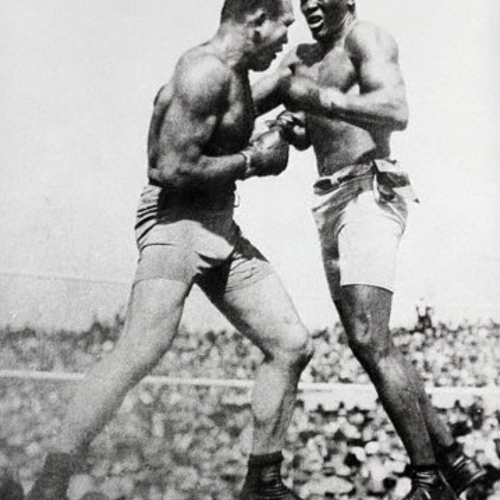
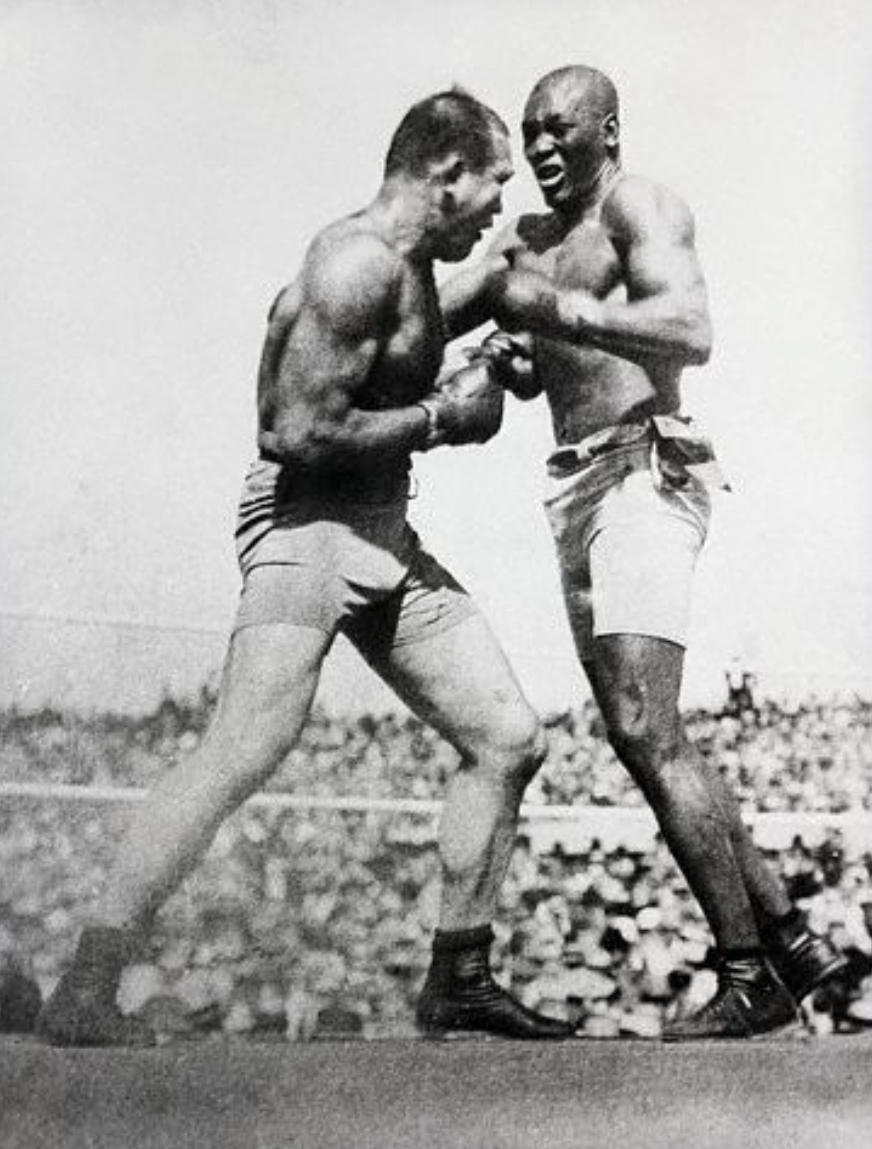
While boxing was popular during the time, his fight gained an unusual amount of attention. This was because Johnson was the first Black undefeated heavyweight champion of America. Jeffries was white and a retired heavyweight champion, but chose to get back in the ring in an attempt to defeat Johnson. However, Jeffries' motivation was largely grounded in racism, competing in the match because he wanted to “to reclaim the heavyweight championship for the white race” (Jeffries, 1909). Many hated Johnson not only because of his Blackness but also because he subverted the racist social conventions of his time, both in and outside of the ring. Most who bet on the fight believed that Jeffries would win the match without a doubt, but this did not end up being the case. On July 4th, 1910, Johnson knocked out Jeffries in the 15th round, leaving white supremacists feeling threatened. Johnson's victory was promptly followed by race riots, and ultimately the censorship of prizefight films, including the Johnson-Jeffries fight film, with many states prohibiting the screening of the fight in certain jurisdictions due to the film's “immorality”(Orbach, 2009). States and cities used the subsequent race riots to substantiate the argument that the exhibition of the Johnson-Jeffries fight film would lead to similar immorality and violence in their cities/states. Undoubtedly, this argument was rooted in strong beliefs of white supremacy and ultimately aimed to censor Johnson’s win to uphold and protect white supremacy in the United States and further suppress Black Americans.
While the company that made the film tried to fight these censorship policies, they were unable to financially afford to do so after spending so much money on the creation of the film itself. While the film was still allowed to be screened in certain places, a majority of the country had banned its exhibition.
Consequently, in 1912, the Sims Act was passed, which prohibited the interstate distribution of prize-fighting films (Vogan, 2010). While this didn’t entirely ban the screening of prize-fight films, it did significantly decrease their exhibition since boxing was legal in very few states at the time. However, even with the Sims Act in place, people across the United States continued to illegally distribute these prize-fight films across state lines and make a decent profit doing so. Then, in the 1920s, states began to legalize boxing, as they realized its popularity could be highly economically beneficial. Despite the legalization of boxing, the Sims Act was not repealed until the 1940s; however, the impact of this law was minimal once boxing was legalized in most states. In the end, prizefight films prevailed over censorship laws due to their popularity, demand, and profitability.
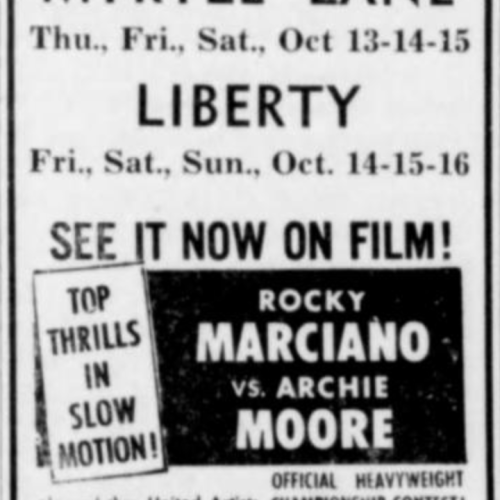
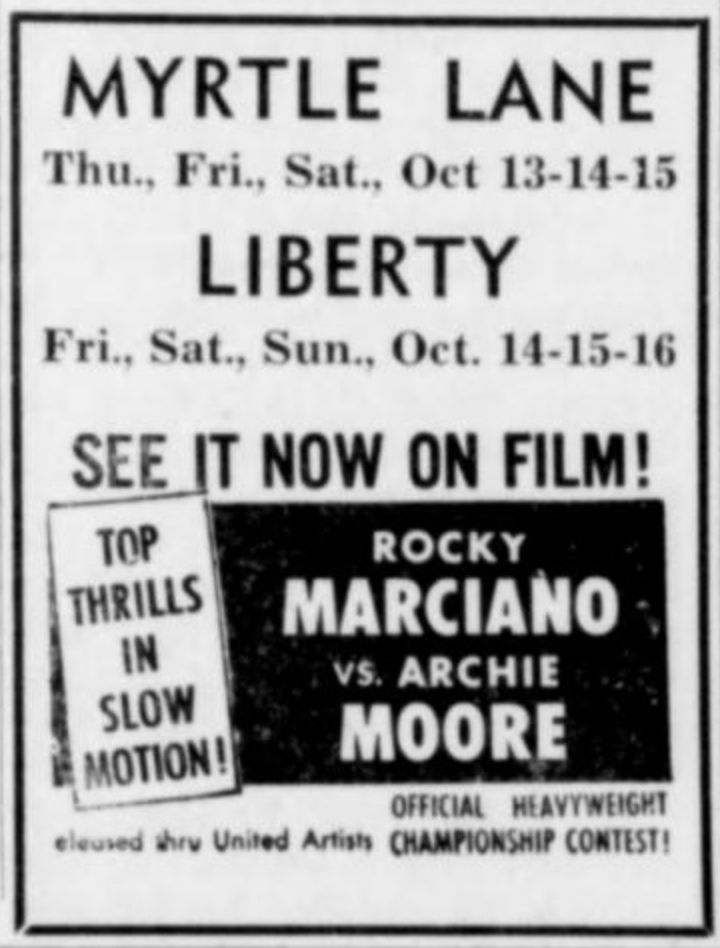
In 1955, the Myrtle Lane Drive-In theater in Coquille, Oregon, screened the boxing match between Rocky Marciano and Archie Moore for three consecutive days, highlighting the peak popularity of prizefight films in the 1950s. While it was completely legal for them to do so, we must remember the long, arduous journey it took to legalize the exhibition of prizefight films, making it possible for Myrtle Lane Drive-In in 1955 to showcase boxing matches like Marciano-Moore on the big screen. Most importantly, the relationship between racism and film censorship in the United States, and the accomplishments of Jack Johnson must not be shrouded.
Works Cited
The Coquille Valley Sentinel, Oct. 1955, p. 14 https://oregonnews.uoregon.edu/lccn/sn96088222/1955-10-13/ed-1/seq-14/
Jeffries Will Meet Johnson, L.A. TIMES, Mar. 1, 1909, at I12.
Orbach, Barak. “Prizefighting and the Birth of Movie Censorship.” Yale Journal of Law & the Humanities, vol. 21, no. 2, Jan. 2009, p. 3. digitalcommons.law.yale.edu/yjlh/vol21/iss2/3.
Orbach, Barak. “The Johnson-Jeffries Fight and Censorship of Black Supremacy.” SSRN Electronic Journal, July 2010, papers.ssrn.com/sol3/papers.cfm?abstract_id=1563863.
Vogan, Travis. “Irrational Power: Jack Johnson, Prizefighting Films, and Documentary Affect.” Journal of Sport History, vol. 37, no. 3, 2010, pp. 397–413. JSTOR, http://www.jstor.org/stable/10.5406/jsporthistory.37.3.397.